
Blog
Recent Updates
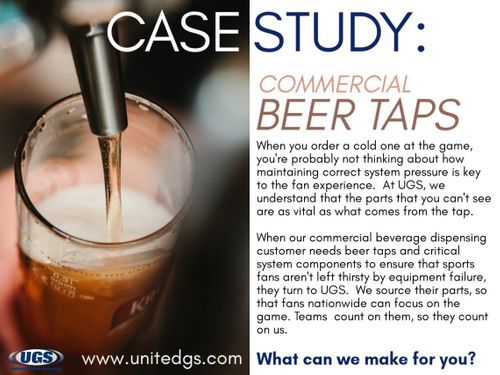
Case Study: Commercial Beer Taps
The parts that we make for commercial beer dispensing systems keep the game flowing! Whether in a stadium, a sports bar or at events, UGS manufactures commercial components and systems that conform to the tightest tolerances and exceed customer expectations. Contact us today to learn how we can help your company deliver great results to your customers with superb quality at a lower cost.
more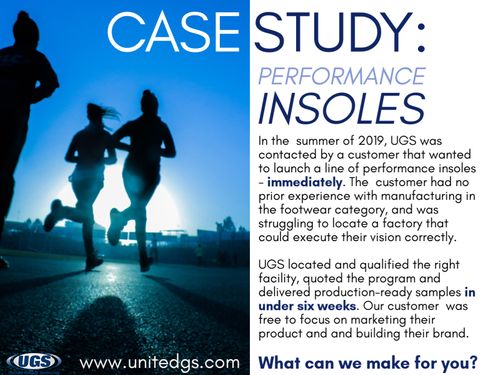
Recap of the National Hardware Show
This year, 2019, marked the 74th year of the National Hardware Show®, held May 7th-9th at the Las Vegas Convention Center. This annual show featured products and services from the home improvement marketplace. Over 2700 exhibitors from over 32 countries launched over 1000 brand new products during the 2019 National Hardware Show, with an...
more
Is Turnkey Manufacturing Right for Your Business?
After spending months, if not years, in the concept and design phase of your product’s life cycle, you’ve now found yourself upon the doorstep of the manufacturing stage. Obviously, this part of getting your product made is arguably the most critical and time-intensive. Trying to manage several disparate companies to handle each part of the production process can turn out to be cumbersome and costly. Here’s where turnkey manufacturing can come into play. To get started, let’s define the phrase turnkey manufacturing.
Turnkey manufacturing means having 100% of the manufacturing...
more
Key Facets of the Outsourced Manufacturing Process
Figuring out how to turn your original idea into an actual product can seem overwhelming. “Where should I begin?” you may be asking yourself. Finding a skilled partner in outsourced manufacturing is an excellent place to start. After you secure that partnership, the outsourcing company can help turn your idea into reality by following these key facets in the outsourced manufacturing process.
It all starts with an idea – an idea that...
more
Innovations in Precision Machining in 2019
Between 2015 and 2024, the CNC machining industry is expected to almost double in value from around $53 Billion to over $93 Billion globally. Advantages of using precision machining equipment like CNC machines – computerized machine tools like lathes, mills, routers, and grinders - results in less human error while increasing overall production efficiency. Precision machining is a common term used in various types of...
more
3 Methods to Streamline Global Logistics
The management of a company’s global logistics can seem daunting at the outset; especially considering the recent changes in tariff increases. Figuring out which HTS codes cover which products can be a time-consuming task. And staying on top of the specific requirements for multiple companies - across a multitude of logistics needs: air; ground; shipping - requires careful coordination of international logistical services. Following are suggestions for utilizing streamlined global logistics and how to optimize their functionality.
- ...
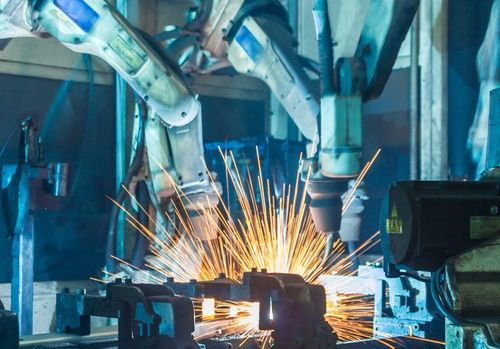
Top Trends in Industrial Manufacturing
According to IDC, by 2021, 50% of the Global 2000 companies will see most of their business depend upon the ability to create digitally enhanced products, services, and experiences. In response to these changes, there are various trends emerging and expanding as we get farther into 2019. These trends include changes in technology as well as the way in which products are manufactured and assembled. Let’s examine some of the tendencies that are evolving in the area of industrial...
more
How to get your Prototype Made
Suddenly, the idea strikes you like a lightning bolt – waking you out of a sound sleep. Perhaps it was a recurring dream about an innovative new product, or just a persistent feeling there is a large need for the product you want to invent and get to market. However the thought came to you, now you’re ready to see it put to paper in a realistic design and 3-dimensional form.
So how do you go about seeing your vision for a new product take form and become a marketable product? You’ve got to get it made as a prototype for starters. And what are the necessary steps that must be taken to...
more
4 Trends Impacting Plastic Injection Molding Makers in 2019
The Plastic Injection Molding Market has been continually evolving and expanding in recent years. And according to Global Market Insights, plastic injection molding has become one of the most commonly-used plastic formation techniques utilized across a variety of industrial applications today. Industrial sectors in automotive, consumer goods, electronics, general construction, packaging, medical and more, are...
more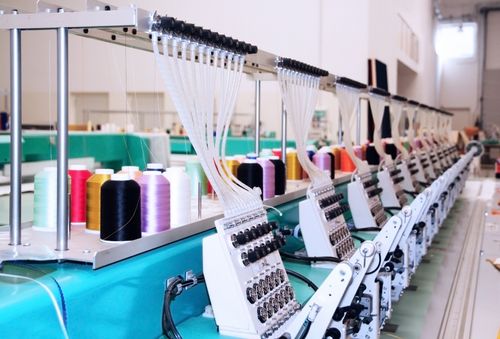
Cut and Sew: Which Factory is Best for Manufacturing your Products?
Cut and Sew: Which Factory is Best for Manufacturing your Products?
Maybe you’re a cutting-edge designer, ready to show the world your creative talent. Perhaps you have a great mass merchandising idea that you are ready to produce. Whatever the situation regarding your cut and sew product, when you’re ready to manufacture it, you’ll need to find the best factory for the job. ‘That’s easy’, you might be thinking. ‘I just need to find the lowest-cost manufacturer.’ But in reality, there are myriad other considerations in the production process.
First off,...
more
The Different Components of Industrial Manufacturing
The industrial manufacturing industry spreads far and wide. From automobile parts to sporting goods, this industry is responsible for the fabrication of products intended mostly for industrial use. There are a variety of manufacturing processes in this field. Let’s take a look at some of the most common below.
more
Can Outsourcing Sub-Assembly Lower Production Costs?
Most original equipment manufacturers (OEMs) choose to outsource their sub-assembly needs to lower production costs, but there are many other reasons to do so. During the sub-assembly process, companies will hire an outside manufacturer to build smaller parts that are used with OEM products. This can save them a significant amount of time and money in the long-run and is a great way to streamline and improve current operations. The main benefits of outsourcing sub-assembly include:
- Cost savings
- Improved quality
- Volume flexibility
Let’s take a closer...
more
5 Devastating Oversea Sourcing Mistakes
The global market is ever-expanding. More businesses are sourcing overseas for a variety of reasons, competitive pricing, lower manufacturing costs, and proximity to market specific customers. However, with great opportunity comes great risk. Whether you’re a budding startup founder or established CEO, both looking to penetrate a new market, it’s best to know where some of the most devastating stumbling blocks are located before you run into them yourself.
In this post, we share five mistakes business owners make sourcing overseas...
more
Want Business Success? Optimize Your Supply Chain!
The performance of your business is undeniably linked to the success of your supply chain. As an established CEO expanding into new regions or a startup founder looking to takeover certain markets, the optimization of your supply chain could mean the difference between seven percent and 20 percent profit margins. At United Global Sourcing, we’ve seen some pretty large profit margins due to supply chain optimization, but a growth of even 10 percent can help expand companies exponentially. According to the Logistics Bureau, 79 percent of...
more
Developing A Supply Chain Strategy? Here Are 5 Tips!
Do you know if your supply chain is helping or hurting your business goals? If you think it’s the latter, it’s time to review your business goals, your supply chain strategy, and how they fit together. The biggest mistakes any supply chain manager makes is keeping the chain and the businesses goals separate. A supply chain is a catalyst for the results you want to get in your business, so it should be included in the business strategy. With that being said, here are five tips on how you can develop a supply chain strategy.
more
The Benefits Of Supply Chain Management Collaboration
A successful global supply chain ultimately comes down to two things: quality and communication. Without one or the other, the chain will operate, but not at optimal levels. If the chain is missing both traits, it will eventually crumble underneath impossible to meet deadlines and ever-evolving end-customer needs.
At United Global Sourcing, we do more than connect you with a manufacturer or supplier. We establish a system that communicates with you on a 24-hour cycle, so you always...
more
10 Supply Chain Secrets Experts Won’t Share
Do you want to improve your supply chain? Would you like to increase your profitability? At United Global Sourcing, our mission is to deliver you the best supply chain participants to grow your business and increase profitability. It’s no wonder why the supply chain industry is growing so fast. According to a report, the supply chain industry was worth about eight-trillion dollars in 2016, and it’s said to surpass $15 trillion in 2023.
The global market is constantly expanding. More businesses are joining the world stage....
more
7 Dangerous Pitfalls In Supply Chain Management
The oversight and expertise needed for supply chain management is invaluable. The ability to plan for the worst and solve problems before they occur is a must. Furthermore, those in global supply chain management like United Global Sourcing leverage the available business tools and technologies to get ahead of the fast-paced industry. The success of a supply chain manager frequently relies on not what goes wrong, but how one handles the problems. In many cases, experts in the industry solve issues before they ever become a problem. These...
more
How To Manage Global Supply Chains Better
The global market is ever expanding. So is the length and complexity of global supply chains. The effort to meet the needs of the market are putting more stress on supply chains and their managers to perform consistently and efficiently. With so much pressure, the temptation to cut corners is ever increasing. Global supply chain management, however, must hold steadfast and do the right thing. Even though global sourcing predated the internet, as did manufacturing, transporting, and distributing, the industry is still in an ever-evolving...
more
4 Barriers to Adopting Blockchain in Supply Chains
At United Global Sourcing, we’re expert communicators and value honesty over anything else. We want you to feel comfortable working with us and trust that we will deliver on our promises. With that being said, we’re digging into blockchain, the technology that’s taken the digital world by storm. It started being used with Bitcoin, but its protocol is now being used across various industries. Experts in the field are saying that blockchain is the best innovation since the internet. At UGS, we would have to agree. The technology is a great...
more
What Companies Do Overseas Manufacturing?
Did you know that some of the best well-known brands and companies send their manufacturing needs overseas? Thousands of companies choose to outsource their manufacturing because it gives them more time to focus on other facets of their business. With China being the primary source of overseas manufacturing, you may be surprised to learn which companies seek a little help overseas.
more
4 Potential Blockchain Applications in Supply Chains
Blockchain has been the buzzword for the last couple of years and rightfully so. It was originally used for Bitcoin. The technology allows for people to know who owns what and when. It’s an indelible ledger, which makes for complete transparence and 100 percent accountability. What’s more, the blockchain technology protocol isn’t limited to currency, as it was originally intended. The blockchain protocol is being used across various industries in a variety of ways. It’s tightening up systems and building more trust in relationships. The exciting part about blockchain is that it will change...
more
6 Ways Blockchain Will Revolutionize Global Supply Chains
As the global market expands, the need for effective and efficient supply chains increases. Two of the largest barriers to improving global supply chains are transparency and communication. Transparency allows for supply chain managers to better operate their chains. Communication tightens up supply chain production, shipping, and fulfillment times. These two barriers have always plagued supply chains, but there is a solution.
Blockchain technology was first utilized with Bitcoin. The technology is a success, and more businesses in...
more
Why United Global Sourcing Is Excited About Blockchain
Do you think Blockchain will change the internet? At United Global Sourcing, we think blockchain will do more than change the internet; it will transform global supply chain management entirely, and we’re excited to say that. Here’s why: Blockchain allows businesses to more securely and transparently manage a wide range of transactions. What does this mean for supply chain management? Quite a few experts in the field say that blockchain is the next best invention since the internet, and we at...
more
How To Find The Best Outsourcing Manufacturer
It’s time you outsource your manufacturing and fabrication needs. Not only will you save money, but you will also remove the responsibility of making sure manufacturing is running properly—it will be someone else’s headache. There are a number of benefits, including growth, flexibility, and quality. When it comes to choosing a sourcing company for your products, it can get a little overwhelming. There are hundreds of companies to choose from, so how do you find the best one?
In this post, we’ll share some general advice on how to...
more
Four Outsourced Manufacturing Challenges
Running a business is challenging. When you decide to outsource manufacturing and/or fabrication, you will encounter new challenges. At United Global Sourcing, we want to help identify the most common challenges and then give you some solutions to better serve your business. Outsourcing can be a daunting decision. The transition, implementation, and follow-through stops business owners in their tracks. We understand! But if you want to grow your business utilizing outsourcing, contact us...
more
Five Benefits To Outsourcing Manufacturing
When it comes to manufacturing and fabrication, United Global Sourcing strives to find the best for its clients. We offer a list of fully vetted, top-caliber factories for you to leverage to lower costs, increase sales, and improve fulfillment. Our commitment to 24-hour communication, unlike most of the industry, is what sets us apart from our competitors. We understand you’re looking for the best outsourced manufacturing for your automotive parts, sporting goods, or cut and sew products.
In this post, we’ll share the five benefits of...
more
The Pros And Cons Of Outsourcing Manufacturing
Are you looking for a way to decrease expenses to free up capital for growth? It can be tough to decide between labor costs or outsourcing costs. On one hand, you can control and manage the labor, and on the other hand, you have to trust the outsourced manufacturing or fabrication is taken care of appropriately. But that’s why you went into business. You want to make an impact on the world and get paid to do it. Decisions like these aren’t something you learn through traditional education. You have to do them on...
more
Want To Outsource Manufacturing? Don’t Risk These Four Things!
The benefits of outsourcing manufacturing heavily outweigh the disadvantages. So why doesn’t every business do it immediately? Fear, cost, quality, and transition issues all cloud the horizon for those looking to outsource internationally. But it doesn’t have to stop your business growth in its tracks. As long as you have brand, production, and quality standards, the world will open up to you and help you grow. All it takes is one phone call to Unite Global Sourcing.
At UGS, we take significant risk away from outsourcing. Our vetted...
more
The Pros and Cons of Casting vs. Forging
At United Global Sourcing, we’ve got all of your manufacturing needs covered.
If you’re looking to outsource manufacturing in your business, you’ve come to the right place. We’re United Global Sourcing (UGS), and we have what it takes to meet all of your manufacturing needs. Different items require different manufacturing methods, and here at UGS, we do it all. Today, we’re going to be breaking down two very different techniques — forging and casting — that accomplish the same thing, which is molding metal into the necessary shape and size.
more
The Importance Of The Right Packaging
You undoubtedly recognize the incredible importance of a high-quality product. It is why you will settle for nothing but the best when it comes to outsourcing your manufacturing. However, at United Global Sourcing, we don’t believe the focus on detail should stop there. We work with our clients to make sure that their product is wrapped in success through the proper packaging.
Did you know that more than half of all purchase decisions are made in-store? That means that the look, feel, and branding of your packaging has an incredibly large influence upon the final consumer purchase...
more
Conduct A SWOT Assessment To Improve Your Supply Chain
When it comes to operating a supply chain, there are a myriad of moving pieces and a large number of hiccups that can occur. Your goal is to ensure that your manufacturing process implements smoothly into the rest of your business operations. In order to make the best of outsourcing your manufacturing, it is important to take the time to conduct a SWOT (Strengths, Weaknesses, Opportunities, and Threats) assessment. This can help you to minimize waste and maximize profits, all while ensuring quality in your products.
If you are considering outsourcing your manufacturing and need help...
more
Busting Five Myths About Outsourcing Manufacturing
When it comes to your manufacturing process, your goal is undoubtedly to cut costs, improve your timeline, and retain quality. For many companies, the thought of outsourcing their manufacturing is pushed aside due to a variety of myths surrounding this version of manufacturing. However, if you want to achieve all these goals, outsourcing your manufacturing could actually be the key you are looking for. Before you write off outsourced manufacturing and stick to in-house work, consider these myth-busting facts.
If at any point in the process you want to learn more about the specifics...
more
The Importance Of Sampling In The Manufacturing Process
When it comes to outsourcing your manufacturing, the benefits are plentiful. However, you might also be faced with concerns about how you will ensure the quality you need from your outsourced manufacturing. There are a myriad of ways we help our clients with quality control and one of the methods we employ is sampling.
Sampling is an important aspect of the manufacturing process and will help safeguard your business from any unpleasant surprises when your products arrive. You want...
more
Find The Best Factory To Manufacture Your Product With These Tips
If you have an invention for a product, the process from idea to production can be extremely complicated and complex. In addition to finding the best factory to manufacture your product, you’ll need to spend some time researching and planning the design of your invention. One of the biggest challenges of product manufacturing is finding the perfect factory to bring your idea to life. You’ll need to do some digging to find one that fits your unique needs and budget, and in this article, we’re going to guide you through the process of finding a manufacturer to work with.
At United...
more
Manufacturing & Casting Processes You Should Know
When a manufacturing company begins the production of a new product, they have a choice as to what kind of manufacturing process they’d like to use. Oftentimes, the process that is chosen will depend on the facility, staff, and the various information systems that are available. Converting raw materials into marketable and saleable products is the backbone of our industrialized nation, so it’s important to understand the differences between the various manufacturing processes that are available. In this blog, we’ll take a closer look at the casting process, and the various forms that are...
more
Should I Outsource My Manufacturing?
Whether your company produces sporting goods, household products, or automotive accessories, determining how and where to complete manufacturing operations is critical to the success of your business. If you haven’t considered outsourcing already, we strongly advise you to do so. When you outsource your manufacturing and fabrication needs, you’ll likely end up with a reduce in labor costs, among other benefits.
At...
more
Prototyping 101
When you have a clever or unique idea for an invention, it’s important to process a patent application as soon as possible. In 2015, the U.S. Patent and Trademark Office processed more than 629,000 patent applications! On average, only 55% of the applications submitted received a patent. A great way to improve your odds of getting a patent granted is to build a prototype of your idea or product. While the patent and trademark office does not require applicants to submit their prototype with their application, it can serve as a serious demonstration that your invention has been well thought...
more
Have An Invention? Turn Your Idea Into A Product With These Tips
While it may be hard to believe, every product on the market today has started out as some kind of idea. From the latest and greatest mobile app to your new kitchen blender, most products you purchase came to life through the process of invention. If the light bulb above your head is glowing with a brilliant idea, you may be thinking about bringing your invention to life. While the road from the product concept to the finished product can be long and daunting, there are certain things you can do to help the invention process go...
more
The Top 3 US Manufacturing Challenges You Should Know
The U.S. manufacturing industry continues to be a key part of America’s economy as it supports millions of jobs across the country. Each and every day, people head off to work in factories, sell products made by manufacturers, or develop Internet protocols that can be used to support and improve the manufacturing process. While this may sound all fine and dandy, there are many challenges that American manufacturers face in today’s economy. Unfortunately, these challenges can make succeeding in the manufacturing industry very difficult. If you’re thinking about manufacturing your industrial...
more
The Advantages of Global Supply Chain Management
When a company has an effective supply chain management in place, they have an immediate competitive advantage over competitors in their industry. This allows businesses to decrease their inherent risks when it comes to buying raw materials and selling products or services. By implementing supply chain management systems, businesses are able to reduce waste and overhead costs. There are many benefits to supply chain management, and in this blog, we’ll discuss a few of them.
United Global Sourcing is proud to offer turnkey solutions...
more
What Is CNC Machining?
United Global Sourcing is proud to offer turnkey solutions for your manufacturing and fabrication needs. Many new clients come to us inquiring about our industrial manufacturing services, who want to know more about CNC machining and how it can help them create the quality product they’re looking for. If you’re new to this term, don’t worry! We’re going to cover everything you need to know about this manufacturing process below.
more
All You Need To Know About Injection Molding
If you work in the industrial manufacturing industry, you’ve probably heard of injection molding before. Injection molding is a unique manufacturing process for producing plastic injection molds from both thermoplastic and thermosetting plastic materials. During this procedure, materials are fed into a heated barrel, mixed, and forced into a mold cavity. When the mold cools and hardens to the configuration of the mold cavity. Once the part has been designed, often by an industrial engineer, the molds are then manufactured by an injection mold company, where it is then assigned to a mold...
more
What You Need To Know About Outsource Manufacturing
Outsource manufacturing is the process of hiring people outside of your company to assemble parts of, or to build an entire product. The main reason why companies across the globe choose to outsource their manufacturing needs is due to the cut in labor costs. When a business outsources a part of their production line to a third-party manufacturing company in a different location, they often see a significant decrease in production costs. At the end of the day, it tends to be more affordable to outsource production processes to companies that have a comparative advantage to produce them...
more
What Is NAFTA?
The North American Free Trade Agreement, also known as NAFTA, is a piece of regulation that was implemented on January 1, 1994. This comprehensive trade agreement sets the rules of trade and investment between Canada, Mexico, and the United States. As the world’s largest free trade agreement, NAFTA’s main purpose is to encourage economic activity between the three major economic powers of North America. When this agreement came into play, numerous tariffs were phased out on a gradual basis.
In this blog, we’ll discuss the basics of NAFTA and the various institutions that support it....
more
How Industrial Engineering can Help to Reduce Development Costs
Engineering companies and companies that highly depend on engineering teams are under a lot of pressure coming from both investors and customer expectations. Back office operations handled by engineers are complex and dynamic and they can easily spread the engineering department thin. This can result in serious consequences related to the quality of their work and various development costs, thus making the future of the company hang in the balance. In order to reduce the development costs and ensure high quality of work, companies can do any of the following.
more
What Does Made in the USA Really Mean?
President Trump has brought several issues to center stage. One of them is American manufacturing. In his pledge to "Make America Great Again", he encourages folks to Buy American and Hire American. He also hopes to further revive American manufacturing through fairer trade deals.
So, what does all this mean for us? Well, that's completely up to us as individuals. Is American patriotism important to you? Do you want...
more
How to Find a Reliable Sourcing Company Overseas
Using an overseas sourcing company can help businesses to a get a return of up to 25 percent. Plus, it contributes to the reduction of the overall costs of running your businesses and improves your profit margins. These savings can be extended to consumers as the products become more affordable to them. In turn, your customers will spend more money to buy your products. Over time, this helps to make the economy of a country healthier. So,...
more
What Are the Benefits of Using Sourcing Companies Overseas?
The Benefits of Using Sourcing Companies Overseas
Outsourcing has gotten a bad rap lately. Recent political disputes have got Americans wondering whether too many products are being sourced overseas.
In reality, however, using overseas sourcing companies is a great way to reduce costs. These savings can then make consumer products more affordable.
When consumers can afford more, they spend more money. This helps lead to a healthier...
more7 Important Facts About Manufacturing Plastic Overseas
Competitors are always trying to bite into your market share. Every dollar you spend on plastic for your products has to yield the highest possible return. For many companies, manufacturing plastic overseas is the answer.
It makes sense to consider overseas production. In April 2016 - April 2017, 6.5 million tons...
moreUnited Global Sourcing Launches Higher Quality & Management Services to Clients
UnitedGS.com offers superior customer service with a focus on quality, management and a diverse offering of cut & stitch, forging, casting and plastics
FOR IMMEDIATE RELEASE
(Troy, MI) Supply chain management is a huge source of frustration for many companies, resulting in countless hours of wasted time and productivity. With a demand for higher quality services, United Global Sourcing now offers higher quality management services.
“When companies partner with us at unitedgs.com, they will quickly discover that quality is our top priority,” stated...
more
Five Things to Know for Your Next Injection Mold
Injection mold tooling can challenge even experienced plastics manufacturers. Your goal is to optimize the mold for the type of plastic, part geometry and finish, desired cycle time, production volume and, of course, cost effectiveness. But where and how do you begin with so many variables? Even after you’ve selected the ideal plastic for the project, a finished part is only as good as the mold used to make it.
In our experience, it’ll be worth your effort to consider the following before beginning your project.
1. Which Metal Is Best?
Injection molds are...
more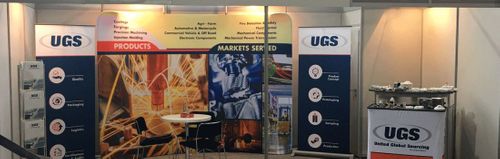
UGS Shares Knowledge, Spots Trends at HANNOVER MESSE
Where do manufacturing industry leaders and engineers go to meet, collaborate and learn? HANNOVER MESSE, billed as the world’s leading industrial technology trade fair, is the place to see and be seen. The show last month tallied a record 225,000 attendees from more than 70 countries, including 3,000 from the United States, and United Global Sourcing was there.
This year’s theme was “integrated industry – creating value,” which fair...
more
Big Questions About China and Vietnam
In the aftermath of the recent presidential election, the only thing for certain about manufacturing in Asia is that nobody knows anything for sure. Yes, the dollar soared and both the Chinese RMB (Yuan) and Vietnamese Dong tumbled. That’s usually good news: a strong dollar drastically lowers the cost of manufacturing in Asia. But at the same time, news headlines were churning a lot of questions about the future. Trade wars? Huge tariffs? What about the higher labor and material costs and the still slow economy in China? Should we be looking at the super-hot manufacturing environment in...
more
Deciding Between Using a Direct Supplier or a Broker: Pros and Cons
Consider this hypothetical scenario: You’ve designed a new part that needs to be produced, and the first thing on your list is to find someone who can make it. You could start by going through your list of manufacturers, vetting their capabilities and getting competitive quotes. But when you’re forced to look outside your own country, the time and costs associated with this effort can quickly add up. The other option is to work through a broker or direct supplier. But how do you know if you’re selecting the best option?
Using a Broker
- Broker
- Finds a...

Eliminate Costs From the Machining Process of Your Extruded Parts
Value-Added Value Engineering (VAVE): It’s a process designed to cut costs or add value by re-evaluating the design and manufacturing process of your product. If you don’t know it, you should. VAVE is something we often help clients implement at any point in the life of their program. Our team is ready to support any customer’s efforts to find opportunities that reduce costs and add value to their product.
If you’re currently manufacturing extruded parts, you could be in a good position to utilize VAVE opportunities through a switch to forging, resulting in a considerable savings...
moreThe “In-House Is Always Best” Myth
We often work with companies who have in-house capabilities to manufacture parts that they instead choose to source with us. Why?
Isn’t sourcing a hassle—with the miscommunications, quality issues and logistical headaches?
It doesn’t have to be. Quite simply, it’s possible to successfully source a part that your in-house team either can’t cost-competitively manufacture or is having problems reliably producing.
That was the case for...
moreSuccess Comes in All Shapes and Sizes
We’re proud to share our 2016 Precision Parts Lookbook, which highlights several of our success stories over the past couple of years. Maybe it’s because of our quality control or our solution-based, supply-chain management approach to projects, but we often take on the difficult projects that require solutions no other manufacturer has yet to provide. These products are just a small sampling of the broad range of our manufacturing expertise, but they exemplify the UGS difference.
moreFive Questions to Ask if You’re Considering Forged and Heat-Treated Aluminum Parts
Forging is an ideal way to create a custom-shaped aluminum part that can withstand excessive force. If you’re considering an aluminum forged part, there are a few questions we recommend you ask when choosing your sourcing partner and foundry.
Q: To what specific temperature does your foundry preheat blanks before forging?
A: The ideal answer to this question will vary somewhat from one grade of aluminum to another, but the ideal answer you’re looking for is whether they can nail this number down to within 10 degrees and provide the specific point in the process...
moreBreaking Down the “Made In China” Stereotypes
Let’s face it: “Made in China” has a bad connotation. Seeing that label on anything can instantly downgrade your perception of the item. For many years, there was some truth to this; however, in 2015, it is simply no longer a generalization which can be made.
China has moved mountains when it comes to technology upgrades over the past 20–30 years and has undergone what some consider a modern-day industrial revolution. It used to be focused on labor-intensive, low-technology goods, almost solely a result of an inferior cost of labor compared to more modernized countries. While this...
morePlastic Injection Molding – Is My Part Right for Asia?
There are many things to consider when deciding if your plastic injection molded parts are a good fit for Asia. There has to be a comfort level, of course, and that can be found in the fact that some of the largest companies in the world source product in Asia including Corning, Fossil, the Big Three Automotive companies; even Apple who produces out of Shenzhen, China (source: jiesworld.com). As it becomes more industrialized, Asia is no longer synonymous with low quality.
There is, however, a big cost advantage. While labor rates...
moreThe Five Steps of Global Sourcing
Global Sourcing is not as difficult as you may think, especially when you have the right partner. The process is fairly straightforward, but if you have never worked with a partner in China or had experience producing a component overseas, it can seem overwhelming. So, where do you start?
Step 1: Product Assessment - Assess what you are trying to manufacture. If it is an established part or component, you likely have access to dimensional drawings, samples, and a list of processes needed to create that product. Your...
moreForging vs. Casting — What’s the Difference?
Metal forging and casting can at times be substituted for each other functionally to create a similarly effective product. Because of this, the two processes are easily confused, and each is best suited for a different application. That being said, the properties of each process can be vastly different. So, what are the differences?
The definition of forging according to dictionary.com is “to form by heating and hammering; beat into shape”. When a component is forged, a piece of...
moreCan Precision be Outsourced? Absolutely!
In my last blog, I explained why working globally is essential to your bottom line and reaching your company goals this year. That being said, many decision-makers are concerned about outsourcing particularly complex products or components, especially industrial parts. In years past, the trend was to manufacture critical components in-house and to outsource only generic or less costly parts. This is due in part to controlling the final product and because there are several misconceptions about China. The reality is, by falling into this pattern, you could be missing out the lion’s...
moreThe “What’s In It For Me” of Global Sourcing
You have goals. We all have goals. Goals we set for ourselves and goals that are set for us. In the business world, generally those goals include some sort of a cost savings or efficiency target. What if you could meet multiple goals with one new resource?
Outsourcing your product or as it is more commonly called “Global Sourcing” could be the answer. Wikipedia defines global sourcing as “the practice of sourcing from the global market for goods and services across geopolitical...
moreFresh New Look, Same Commitment to Your Bottom Line
Welcome to the new unitedgs.com!
UGS commitment to help you improve production efficiencies and your bottom line is stronger than ever, and it all starts with our website. This new, interactive website was designed with the user experience in mind and mapped out for improved site navigation and optimum mobility. We wanted to make sure you could get the information you need as easily as possible, whether in the office or on the road, so our site will look just as great and functions just as well on your smartphone or your computer. The completely revamped look is fresh and modern, a...
moreWhat Is Closed Die Forging?
Closed die forging also know as impression die forging is where metal is placed in a die resembling a mold attached to an anvil. Usually the hammer die is shaped as well. The hammer is then dropped on the workpiece causing the metal to flow and fill the die cavities. The hammer makes contact repeatedly within milliseconds. Depending on the size and complexity of the part the hammer may drop multiple times in a series of quick successions. The excess metal that is squeezed out of the die cavities is referred to as flashing. The flash cools more rapidly than the rest of the material and the...
more
Precision Machining
Precision machining is a process where material is removed to make a component or part that has a very high tolerance. The tolerance held depends on the machine but more precision CNC machines will not have a problem holding a tight tolerance of 0.0002” or 0.005mm. Precision machining can be classed as milling turning, or jig boring but also includes other types of processes such as laser and water cutters.
Precision machined items are around in everyday items such as car engines, electric motors, or even clocks. Nations such as Switzerland or Germany have a reputation for their...
moreWhat Are Cast Parts?
As I mentioned to you last week, I wanted to review what a casting was and this is part of a series of manufacturing disciplines that we do at UGS.
Casting is a manufacturing process by which a liquid material is usually poured into a mold, which contains a hollow cavity of the desired shape, and then allowed to solidify. The solidified part is also known as a casting, which is...
moreWelcome
Welcome to our site! We are in the process of building our blog page and will have many interesting articles to share in the coming months. Please stay tuned to this page for information to come. And if you have any questions about our business or want to reach out to us, we would love for you to stop by our contact page.
Thank you!
more